In previous posts, Embrace difference to enhance your business & Why do innovators leave? just as an example, I’ve talked about embracing employees’ differences to strengthen your organization. In this post I just want to reiterate these ideas.
In Evolve or Die I talk about adaptation, continuous improvement, and continuously changing how management sees outsiders. These are key concepts in our increasingly tumultuous environment thanks to political instability and public unrest.
Bringing in people from within your organization has some great advantages, there’s no onboarding process, they already understand the core business, and they are more likely to remain loyal to the organization over the long term.
Example
Fred’s Freight has a CEO who is retiring, and the board is now looking for a new CEO.
Situation #1 The board interviews candidates from other industries and hires the COO from Moon Chucks restaurant chain.
Situation #2 The board interviews candidates for other industries and promotes Fred’s Freight’s current COO to CEO, even though he’s always been at odds with the retiring CEO over how to manage the company.
Result
In situation #1, the new CEO has very little experience with the freight industry, and while he brings some new ideas, he’s still thinking in the mindset of a restaurant chain and not a freight company. Bringing him up to speed on the industry will take time, and new ideas will take longer to implement and may not be the best for the company.
In situation #2, the new CEO already has the required industry knowledge, and any new ideas will be more likely to align with the company’s goals and capabilities.
Outside the C-Suite
This doesn’t just apply to executives; it applies to all levels of your organization. You could have a person clocking in for 8 hours, 5 days a week, who has the next big idea, and they are so low within the organization that they can’t get their voice heard. What is someone like that going to do? They are going to get frustrated and leave to start a company based on that idea and, then your organization will lose out on the idea and the potential profits from that idea, and instead of benefiting from the idea you’ll end up paying a large amount to his company for the privilege of using the industry changing idea.
Now, if you had kept that employee by giving him a place to safely present his idea, and acted upon it, your organization would be using the idea for free and charging your competitors to use it, thereby increasing your overall profits.
Embrace the odd ones.
Most organizations want a well-behaved, company culture embracing employee. But the people who change industries are the ones who reject that culture and buck the system. These people should be seen for what they are, mavericks and assets. By embracing them rather than punishing them, your organization can thrive.
In Why do innovators leave? I said this:
The best way to utilize innovators in a structured environment is to give them a problem, set loose boundaries, and give them a budget. Once you’ve done that, tell them to find a solution and set them free.
Not having the pressure of a 9 to 5, plus home life, and trying to find some time to relax and recharge, then being expected to develop the next great idea is the fastest way to push your employee to burnout. And once they burn out there won’t be any great ideas. This is why I advocate for a structured environment where the innovator or internal outsider can work on their ideas while being paid for their work. Paying them to work on new ideas is an investment in your organization’s future, it’s not something that shows immediate results, but over the long term it pays dividends.
Conclusion
Embrace the odd ones, the innovators, the internal outsiders, and your organization will benefit. Hold them down, and your organization will end up paying the far more without any of the benefits.
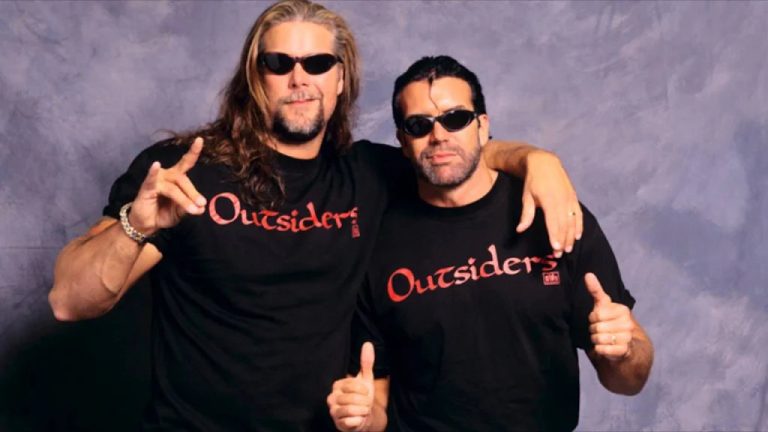
Note: Why did I use the picture of Nash and Hall for this post? If you know anything about pro wrestling in the 90’s, then you’ll know when they jumped to WCW from WWF, they brought in a fresh idea that revolutionized the pro wrestling industry. They were known as the “The Outsiders” and those two men put things in motion that probably saved and grew the pro wrestling industry. I felt it was fitting, having been a pro wrestling fan growing up.