Note: This post is focused on the United States and its issues, but what is said here for the most part could be applied to any country.
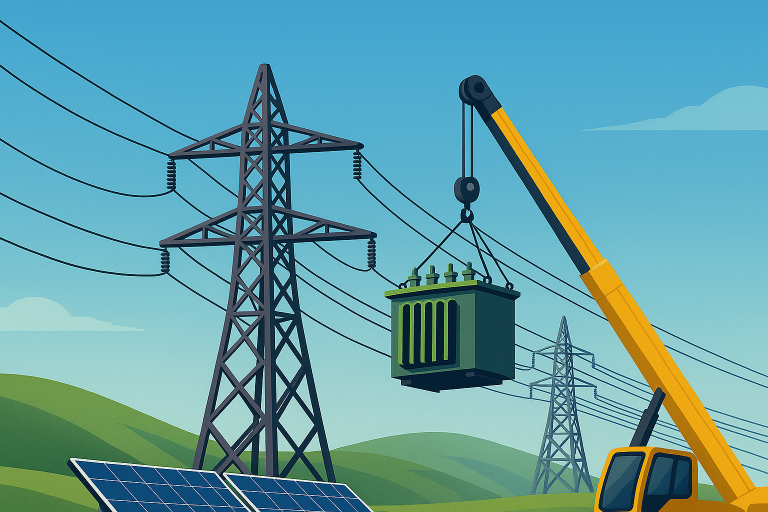
With the rise of electric vehicles, electric appliances, ever-growing reliance on datacenters, and the need for more and more A.I. datacenters, electricity is becoming more and more of a valuable commodity. The sad fact is that we have not modernized our electric grid to a point that can handle the load we are asking it to deliver.
The need for electricity has become so great that Amazon, Google, Meta, Microsoft, and other tech giants are signing deals with nuclear power plants for power, and this is just the beginning. Electricity prices are going up for consumers, and pollution-generating power plants like coal and natural gas are being looked at as the solution.
Nuclear material, coal, and natural gas are finite resources; they will run out. You know what doesn’t run out? The wind and the sun, sure, some day the sun will become a red giant and destroy the usefulness of solar panels, and blow the atmosphere from the earth, thereby eliminating the wind for turbines, but that’s not expected to happen for another 5 billion years. I’d be willing to bet that nuclear material, coal, and natural gas will run out long before that 5 billion-year milestone is reached.
So why am I explaining all this? We, as citizens of this planet, need to look at our future, and not just “our” future but the future of our entire race. We need to start taking a long-term look at how to approach everything. Sure, we’ll have to utilize short-term stopgaps to meet our current needs, but if we invest in our future now, we can prosper for the long term.
Solar
Solar power is by far the most popular and well-known source of renewable energy; everyone knows what a solar panel is and what it does. When I step out of my house during the day, I look at all the houses around me and see black roofs that are covered in sunlight, then I think about all the wasted energy being dumped into those roofs through that sunlight. Think about it, there’s free power being shined down on that roof and instead of capturing it and turning it into usable electricity, it’s being wasted and turned into heat within the home that the homeowners then have to use energy from powerplants to air condition to counteract.
Then I imagine solar panels on those roofs and how they could not only capture that sunlight and convert it into electricity but also block that heating effect and thereby lower the homeowners’ air conditioning bills by not only lowering the amount of air conditioning needed but also by providing free power to that air conditioner.
Now I want you to do something: go on Google Maps and look at any large industrial site near you, look from the top down, and look at their roofs. What do you see? Big open, black space that gets a ton of sunlight. Again, that’s wasted potential. Cover those roofs in solar panels and harness the free energy source that we all have access to.
While you’re looking at those large empty roofs, also look at the parking lots for those and any businesses. Again, you’ll see a big open space that is generally covered in black asphalt, and again, that wasted energy that is collecting heat energy from the sun and heating the surrounding area, including the vehicles that are parked there.
Why not put up a solar canopy over that parking lot? That canopy could be tied into the building’s power and increase its available power, or could be used to provide employees a place to plug in their electric vehicles to charge while they are at work. That last idea could be seen as a perk to attract employees. The collected energy could also power LED lights to keep everything visible once it gets dark and security cameras to help keep employees safe. There’s also the added benefit to employees that their vehicles would be covered during the snow season, so they wouldn’t have to take the time to clean off their vehicles after work.
Wind
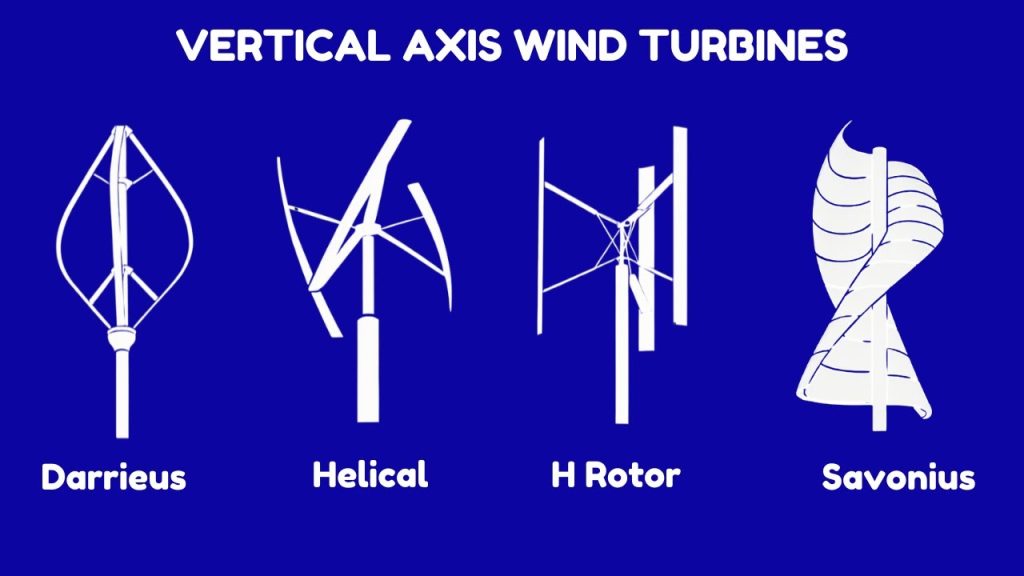
When you think of wind, the first thing to come to mind is those big wind turbines in open fields. But what the wind industry has failed to explain is that there are smaller, less intrusive wind turbines meant for home and commercial use. Take a look at this short blog post titled “Different Types of Wind Turbines You Should Know” and make sure to scroll down to see the most popular vertical types. Below is a graphic that gives a basic idea of the four main types.
Again, when I look at my neighbor’s roofs, I think about the wasted solar energy, but I also envision ridgetop wind turbines. These wind turbines take a vertical-style turbine and lay it on its side, then mount it to the ridge of the roof to capture wind energy. These are great for capturing wind energy because not only do they capture the wind that flows directly at the opening, but they also use the slope of the roof to push wind into the turbine’s opening and thereby increase the amount of wind energy they are able to produce. Below is an artist’s rendition of what those ridge-top wind turbines look like, along with solar panels along the roof.

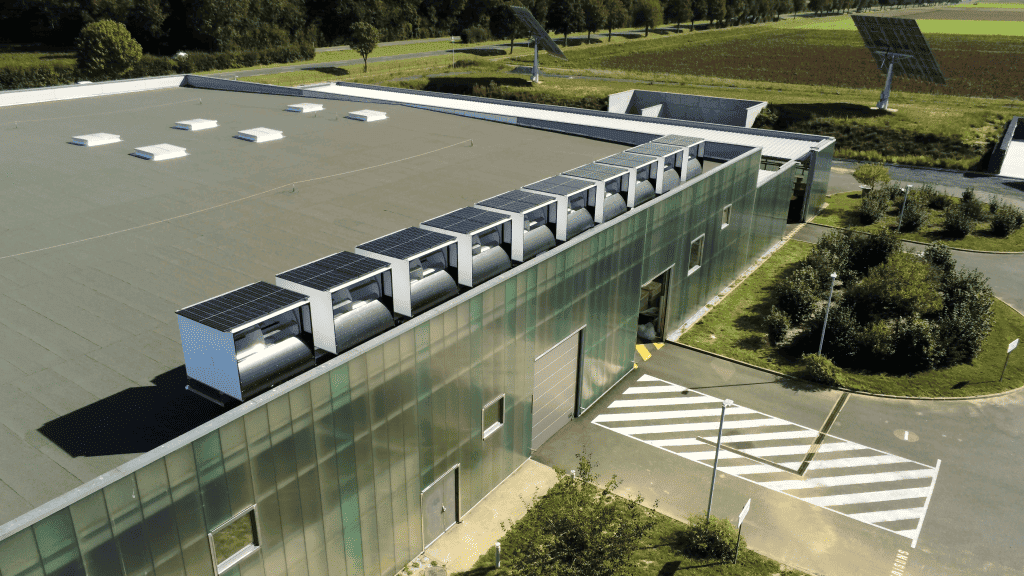
There are many ideas for commercial buildings as well. The type I favor (pictured below) is set up right on the edge of the building, isn’t over obtrusive, and has the ability to incorporate solar panels on top of the turbine. There are many options when it comes to commercial rooftop wind power, but this is just the one I tend to favor.
Energy storage
Ok so now your home or business is harnessing the sun and wind to power your building, what happens when you’re not using as much as you’re producing? This is where battery storage comes into play. Lithium-ion batteries are the current standard; the problem is that they are relatively short-lived, and when they go bad, they tend to go bad catastrophically. Do you remember when a bunch of phones were exploding and catching fire? Yep, those were a result of Lithium-Ion batteries. They serve a purpose, and when manufactured correctly, they can be safe, but they are expensive to manufacture, and there are better battery types for power storage.
The zinc–bromine battery is my battery of choice for long-term energy storage. These batteries have a high cycle life and low fire hazard. While they do still require metal to be mined, zinc is much easier to come by than Lithium. Having a bank of these batteries in your basement or garage, or in a building next to your industrial site, would allow you to capture excess energy generated and store it for future use during times of high power consumption or when the solar and wind generation is lower than needed.
Community power banks
Now, let’s take a look at what happens when your home or business is empty and the power needs are minimal. Homes sit entry for most of the day, the family is at work or school, and the home sits empty, but those solar panels are at peak power generation time, and the ridgetop wind turbines are capturing wind energy day and night, let’s say you’ve recharged your home’s Zinc–bromine batteries by 2:00 P.M. but the first person won’t get home until 3:00 P.M. and real power usage won’t start until 5:30 P.M. The majority of the power being generated during that time would just be wasted.
This is where the idea of community power banks comes into play. In some communities, there are “façades homes”; these are buildings built to look like residential homes or commercial buildings that are placed in neighborhoods or cities to mask the fact that they are utility sites. These could be placed in communities all over the country to collect excess power from homes with fully charged batteries and disperse that collected power to homes that need it later in the evening when solar generation has ended. These sites could also be where internet hubs and other utility hubs are located.
Untapped potential of the highways
For approximately 12 years I was a contractor with The New York Times, driving bulk loads of newspapers from one side of the state halfway across to the other for distribution and delivery. 6 nights a week, I spent hours driving with nothing to do but think, sure I listened to podcasts and audiobooks, but sometimes I just put on some music and thought about ideas. One thing I thought of often was how it could be generated from highway traffic. See, when I would have a breakdown, I’d pull off on the side of the road and get out to try and fix whatever the issue was, and when my car or truck would fly by me, I’d feel a massive gust of wind. Then, as I was driving, I would look at the median between the two directions of traffic and observe how the wind from passing vehicles would blow things around in the median.
This is where the idea for highway median-based wind turbines came from. Basically, the idea is, why don’t we put vertical wind turbines, say Savonius-style turbines, in the medians? You put a concrete block in the middle of the median, then mount a 3-foot-tall Savonius wind turbine on top of that, then put some mesh over it to keep animals and debris out, and then you can even place solar panels on top of the turbine to collect more energy. The power generated could power street lights and digital traffic signs, or be routed to local communities to supplement their own power generation. You could even stack two or three turbines and generate more power, and it would have the added benefit of blocking headlight glare from oncoming traffic that can cause temporary blindness and accidents.
Obviously, this is not an option when it comes to highways that employ Jersey barriers for traffic separation, but you could always put the turbines on the opposite side of the highway. This, of course, would be a greater cost since it would mean doubling the amount of investment. But there is another option, narrow Savonius wind turbines clamped to the top of the Jersey barrier. While they would not generate the same amount of power, they would generate some power, though I fully admit the idea has its flaws, and placing full-size turbines on the outside edge of the highway would be far more practical.
The role of power plants and utility companies
No, I’m not advocating for the destruction of power plants and utility companies, far from it. I see them both as important partners in all this. The utility companies would be the party responsible for managing all this infrastructure, and for their management, consumers would pay a set fee, albeit a lower fee than they currently pay, but something fair to the consumer. And they would just be paying for the cost of managing the on-site infrastructure and local power bank, but for access to the power plant’s capacity in times of need.
While utilities companies would still have the need to maintain power plants, they would not have to constantly balance the load between the needs of residential and commercial usage and the data centers’ usage. Residential and commercial buildings would generate the majority of their own power needs and then only tap into the power plant’s capacity from time to time as needed, like say when a home’s solar panels are damaged in a hail storm and have to be replaced. In that scenario, the home would just draw on the community power bank to power itself, and then the power plant would recharge the power bank for the amount drawn, then add that to the home’s base charge per kilowatt hour drawn.
This would allow power plants and their managing utility companies to focus on providing the majority of their power to data centers.
Conclusion
We must start looking at how we can advance our electrical generation. The backward notion that coal and natural gas will power our future is outdated and out of touch. Nuclear has its place and is used correctly, and can provide power for generations to come. But we must start to build a distributed grid with power plants that rely on renewable energy if we want to continue to grow our world and our economy.
Any major overhaul of our electrical grid will be a massive investment and will require a nation-state level of funding, but if we do nothing, we will become nothing. Just because it’s hard doesn’t mean it’s not worth it.
This post is licensed under CC BY 4.0 as stated under the license page of this site.