Key Take Aways
- Decentralized AI Systems Improve Utility: Instead of relying on limited, centralized AI chatbots like OpenAI’s default models, companies should deploy their own network of task-specific AI agents, coordinated by a main “control agent” chatbot that can route employee queries appropriately based on permissions.
- Enhanced Data Security and Access Control: The proposed model includes built-in permission checks, ensuring that employees only access data they’re authorized for—minimizing security risks while improving functionality.
- Long-Term Cost Efficiency and Public Relations Value: While self-hosting requires upfront investment in infrastructure and maintenance, it reduces recurring subscription costs and allows companies to contribute to open source development, potentially boosting brand reputation.
Recently, companies have been partnering with OpenAI to release organization-specific A.I. Chatbots. While I applaud the forward-thinking mindset, these chatbots leave a lot to be desired. Yes, Open AI does have a robust “drop-in” solution; the problem is that the solution is generally limited to the data that is put into it. These chatbots are generally restricted from accessing the internet and the organisation’s intranet. This means the chatbot can only access information that is given to it by the company and OpenAI.
This is where the problem lies, if the chatbot can access for example a spreadsheet with vender information, then when an employee asks the chatbot to provide the account number for XYZ Corp and the chatbot says it can’t provide that information, the employee will decide that the chatbot is useless and stop using it. This has a knock-on effect when the employee tells their coworkers about their experience, and then before they even attempt to use the chatbot, they decide it’s not worth the hassle.
Control Agents
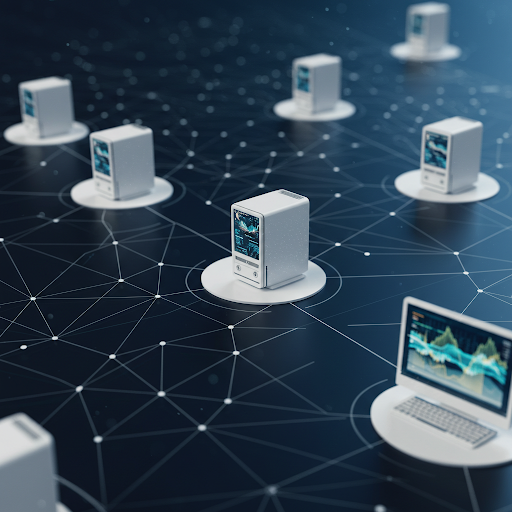
So, how should companies resolve this issue? First I would recommend hosting your own A.I. system. There are plenty of well-developed Open Source A.I. models out there that you can choose from. Second, I would recommend building a network of A.I. systems for different tasks that are then linked to a main A.I. Chatbot that the employees then interact with; this main chatbot would be the control agent.
Each local A.I. would have an employee and their permission level listed in its system. So when an employee requests data that they are not cleared to have they would be denied that information. Let’s explain this with two examples.
- Example #1 – Bob works in the sales department and logs into the control agent chatbot with his employee ID. He then asks the chatbot for the CEO’s annual pay. The chatbot will query the accounting A.I. that it knows stores that information and provides Bob’s employee ID and the request for the CEO’s annual salary. The accounting A.I. will check it’s permission list and see that Bob does not have permission to access that data and tell the control agent chatbot that Bob does not have permission to that data and refuse to provide the CEO’s salary. The control agent chatbot will then inform Bob that he does not have permission to access the CEO’s salary information and provide instructions on how to submit a request for the appropriate permission level.
- Example #2 – Alice works in the accounting department, and the board has requested a report on the CEO’s salary. Alice logs into he control agent chatbot and requests the data. The control agent chatbot again sends the request with Alice’s employee ID to the accounting A.I., which then checks her ID against its permission list and sees that she has permission to access that data. The accounting A.I. then accesses the data and provides it to the control agent chatbot which then presents it to Alice so she can complete her report to the board.
In both cases, the control agent reached out to the appropriate subagent to access the information, and the subagent was able to safeguard the data. Obviously, the control agent shouldn’t have to reach out to subagents for simple tasks, but for department-specific data, this would make sense. The control agent should be able to assist with non-specific tasks like summarizing emails or helping to write a professional email or any other general tasks that the company gives it permission to perform.
Costs
Cost is always a factor, but factor in the long-term cost of an enterprise-level subscription to OpenAI versus the cost of setting up your own infrastructure once. Yes, the initial setup cost will more than likely be greater than the annual OpenAI subscription cost, but once you’ve paid the set costs, you don’t have to pay that again, unlike a subscription.
The control agent chatbot would most likely have to be run on a large server since it will be the chatbot that every employee interacts with. The department-level A.I., on the other hand, could be housed on an affordable tower server or even something smaller since it only needs to store its department’s data and will not be accessed nearly as frequently.
The main ongoing costs associated with hosting your own A.I. system would be paying an engineer to maintain the system and replacing hard drives and other miscellaneous bits of hardware as they break down. Remember, the A.I. model is open source and free to use, so there’s no cost there.
A P.R. boost
Another way hosting your own Open Source A.I. chatbot can benefit your organization is good public relations. When the engineer isn’t fixing software or hardware they can be introducing new training data and working to improve the model. This can then be shared with the open source community and show that your company is giving back. Rather than having your engineer sitting around waiting for something to break, they could be actually working to improve your A.I. system and, after sharing the improvements, gaining the company positive press in the media, all without you having to launch a massive advertising campaign and spending the associated costs that go with that.
Conclusion
While using the OpenAI “drop-in” solution is a nice toe in the water to get a feel for A.I. chatbots, your organization will be severely limited by its capabilities, and employees will fail to see the potential in A.I. But by self-hosting an open source model, investing in the infrastructure, and contributing back to the community, your origination can gain all the benefits while lowering operating costs in the long term.